Love and Hate , Past and Future, Gods of War
With Santa Monica Studio reportedly working on two new titles in the God of War franchise, fans have plenty to discuss. However, not everyone is pleased with the direction the series has taken following Ragnarök. With both projects expected to arrive by 2027, the big question remains: which one will breathe new life into the franchise—the long-rumored remake or the upcoming spinoff?
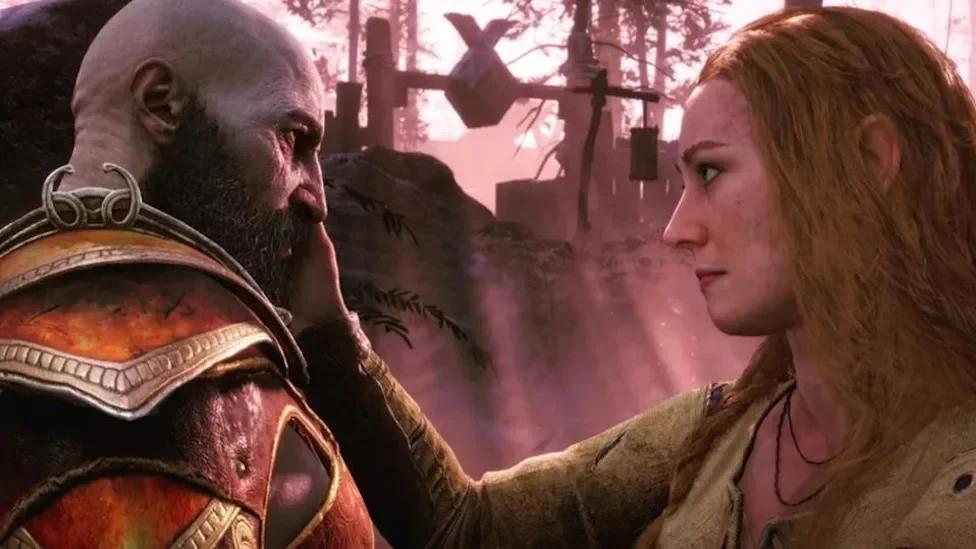
God of War Laufey
Credit: Sony Santa Monica
During the PlayStation State of Play presentations, Santa Monica Studio used the spotlight to unveil two major projects for the God of War franchise. The first was the highly anticipated God of War Trilogy Remake, revealed on February 12, 2026, and featuring the return of T.C. Carson as the voice of Kratos. Then, on June 2nd, the studio surprised fans once again by announcing a second project that quickly took the internet by storm.
While many game studios work on multiple titles simultaneously, they rarely announce them so close together due to the lengthy development cycles involved. Both God of War (2018) and God of War Ragnarök spent roughly five years in development before release. Despite that history, these newly announced projects are reportedly on track to launch within the next year, fueling speculation that Santa Monica Studio has been developing them in parallel for quite some time.
A roadmap this ambitious from a AAA studio would normally send fans into a frenzy of excitement, spawning countless theory videos, dramatic reaction streams, and deep dives into every detail leading up to release. While the God of War community has certainly been vocal, much of the discussion has been surprisingly divided.
Skepticism surrounding spinoffs in long-running franchises is nothing new, but many fans seem convinced that Laufey is being positioned as the new face of the series while Kratos is being pushed aside. We don't believe that's the case. In fact, we believe the upcoming title will feel less like a replacement and more like a natural continuation of the Norse saga, with seeds for this story having been planted since the very beginning, even if they weren't obvious at the time.
The decision to release the original trilogy for modern audiences alongside a game centered on Laufey may be part of a much larger strategy. Rather than signaling the end of Kratos' journey, it could be setting the stage for the next chapter in his story, reconnecting players with his origins before propelling the Ghost of Sparta into whatever comes next.
The video from Youtuber YOUNG DEFIANT is a prime example of the misunderstanding of the upcoming release. He speaks of how this game existence in any form ruins not only the franchise but gaming as a whole. ( He also states he is not a fan of the franchise, has not played any of the games before 2018, which he completed despite hating it the entire time, does not plan on playing the games now, so his opinion stated in the video is extremely bias. ) He states that true God of War ended with the beginning of the 2018 release.
WARNING, explicit language in the video and the following quote.
“I remember GoW 2018 and I said, Ew What the f*** is this? Now Kratos is a stay at home dad, he is a house husband. He has been in therapy or something. He has been basically castrated, he is no longer angry”. This quote from the video encapsulates one of the most common criticisms aimed at the modern God of War games. However, it overlooks a fundamental aspect of Kratos' character arc. From the very beginning, Kratos' anger was never without reason. He was a deeply tormented soul who had suffered unimaginable loss, but he was also the architect of much of his own suffering.
“We promised that the sins of your past would be forgiven, and so they are. But we never promised to free you from your nightmares. No man, no God, could ever forget the terrible things you did.”
The original God of War centered on his struggle to escape the nightmares that haunted him. The moment he committed his greatest sin was also the moment he was forced to confront the monster he had become. From that point forward, much of the original trilogy was not simply about vengeance—it was about a man grappling with guilt, regret, and the consequences of his own actions, even as he struggled to change his fate.
From the very first scene of the entire franchise, Kratos is broken. He is beaten, and he has given up. Standing atop the Suicide Bluffs, he makes the decision to end it all and jumps. Mere moments before impact, the game begins.
In service to the gods, and in exchange for peace from the insanity that torments him, he becomes our hero—not by choice, but by desperation. Once the game is completed, the story returns to the continuation of that opening scene. Kratos jumps once more, but this time, where the scene originally ended, he is saved by Athena, who offers him the title of God of War.
This scene set the tone for Kratos. A being of rage, an unstoppable force, he seeks redemption and forgiveness at first, and revenge later, yet is unguided. It shows you everything you need to know about his character from the very beginning, but if it came out today all people would say is, “Strong man needed to be saved a woman, this is woke trash.”
There are several stories still left to tell within this franchise. The world-building is fantastic, and even though we experience it primarily through Kratos' and Atreus' eyes as they travel quickly from realm to realm, it is clear that the world is filled with centuries of lore and countless secrets waiting to be explored.
While the original trilogy portrayed Kratos as a solitary protagonist, killing or seducing nearly everything in his path, the Norse Saga gave him the opportunity to find the redemption he had been seeking since his days in the Oracle’s Temple. He still carries the same rage, but it is far better tempered—not because of therapy, but because he bears on his own skin the constant reminder of what his Spartan fury can lead to. Midgard is his home now, and for the first time in a very long time, he has something—and someone—he truly wishes to protect.
“To grieve deeply is to have loved fully. Open your heart to the world as you have opened it to me, and you will find every reason to keep living in it”
It is important to understand that Kratos' arc is one of growth and peace, of finally learning to put his past behind him. He is not neutered, as the video claims—he is in control. No god, prophecy, or force of fate will ever control him again.
Much of that path was paved by Laufey, as we see through the flashbacks in Ragnarök. In the few glimpses we are given of her, she doesn't seek to restrain Kratos but to guide him toward becoming a better man. From the very beginning of the Norse Saga, we are shown just how significant her role is in his story, opening with Kratos building her funeral pyre and setting her on her final journey. In many ways, while it is the continuation of Kratos' tale, this is also where Laufey's story truly begins.
Remember, this spinoff does not necessarily retcon Laufey's death. Once again, we can look back to the original trilogy, which is now being remade. Throughout those games, Kratos dies several times only to find his way back, and Athena herself also dies before returning from a higher plane of existence, where she continues to influence and further corrupt Kratos.
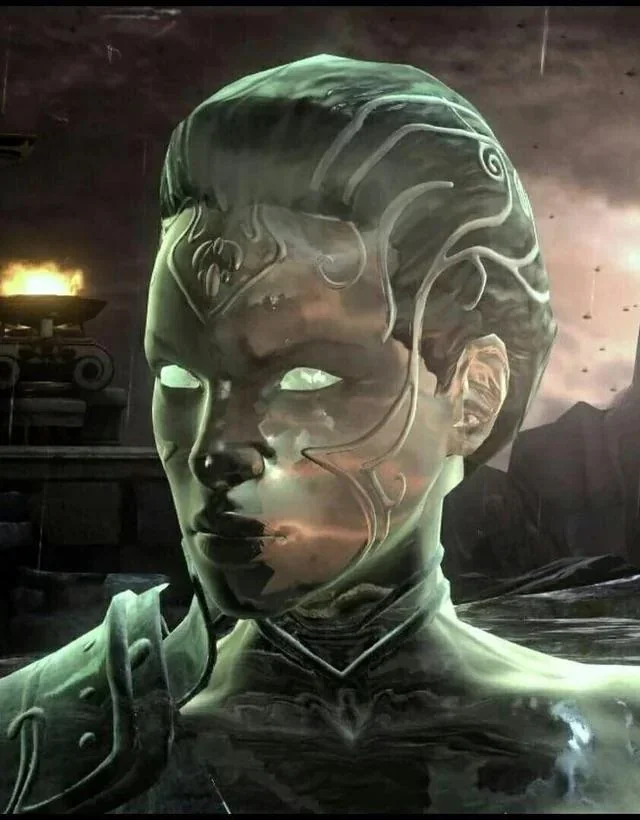
Athena, God of War 3
That pattern appears to continue in Ragnarök, where Odin is consumed by his obsession with what is hinted to be that very same higher realm. Even the mysterious green mask bears a striking resemblance to the ethereal design of Athena's spectral form in God of War III. By remaking the original trilogy alongside this new project, Santa Monica Studio has an opportunity to strengthen those narrative connections, allowing players to witness Athena's death and rebirth while drawing intriguing parallels to Laufey's own death and potential return. If intentional, the symmetry between the two characters could serve as a compelling bridge between the Greek and Norse eras of the franchise.
This is the direction I believe we are traveling for the franchise. Athena is still attempting to control him in God of War 2018, while Laufey has been guiding and aiding him from before. It is clear that Santa Monica Studios wants these stories fresh in our mind for a reason. Even made clearer with the Valhalla expansion for Ragnarok. He is learning to challenge the God he was, to challenge his very nature because of the man he has become. Realization that he just as much at fault as the gods and fates he killed.
Soon I believe we will see the return of Athena as she targets the 9 realms, and for the first time Kratos will have to fight and kill to save a home rather than destroy it. The writers have stated that the franchise is done exploring the Aesir, that the Norse saga ended with Ragnarok, but they never said he will be forever leaving Midgard. It is the only home he has left. Laufey is in a land of gods from all kinds of mythologies, and if Athena still wants to sink her claws into Kratos. There is only one logical place to start.
We at The Maelstrom Hold are looking forward to both the God of War Trilogy Remake arriving in early 2027, as well as the continuation centered around Laufey, expected in late 2027 or possibly 2028.
We are also especially excited for the return of the original voice of Kratos, T.C. Carson, whom we had the opportunity to meet and speak with in New Orleans last year. He is a remarkable voice actor with a deep passion for the role, and his return is something many longtime fans will appreciate.
While we understand that not everyone is enthusiastic about this direction, we choose to remain optimistic about gaming as a whole. There is already enough negativity in the world, and we believe it is important to focus on what inspires excitement and creativity within the medium.
Developers will never be able to make every player happy with the games they create. Our hope is simply that they continue to make the experiences they are proud of—stories, designs, and worlds that reflect their vision and passion.
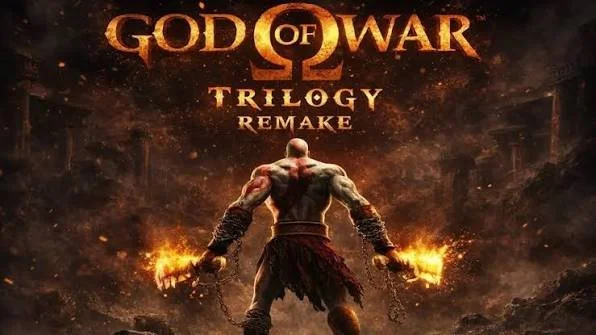
Courtesy of Sony, Santa Monica Studios
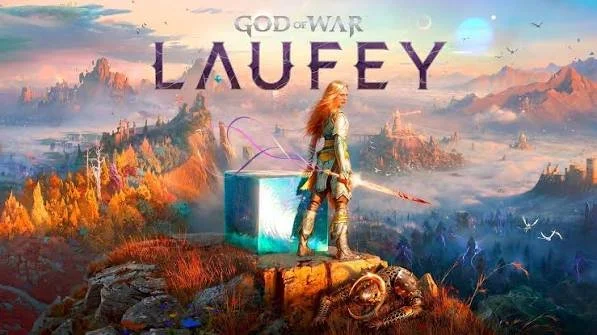
Courtesy of Sony, Santa Monica Studios

About The Author
For Lucian, gaming transcends mere pastime; it embodies a canvas of potentiality and future evolution. With an unwavering commitment to appreciating games not just for what they are, but for what they could become, he refrains from hasty judgments, seeking the inherent beauty in every project. In an industry often clouded by pessimism, Lucian strives to illuminate the positive aspects, fostering a culture of optimism and appreciation. Whether engrossed in intense PVP sessions or immersed in the narrative depths of a single-player story, he finds joy in both the communal experience and solitary exploration. As long as there's a game to play and a friend to share it with, Lucian is content beyond measure.