Star Wars Never Needed a Genre
How Changing the Rules Kept the Games Alive
By Søren Ahrensborg Kamper
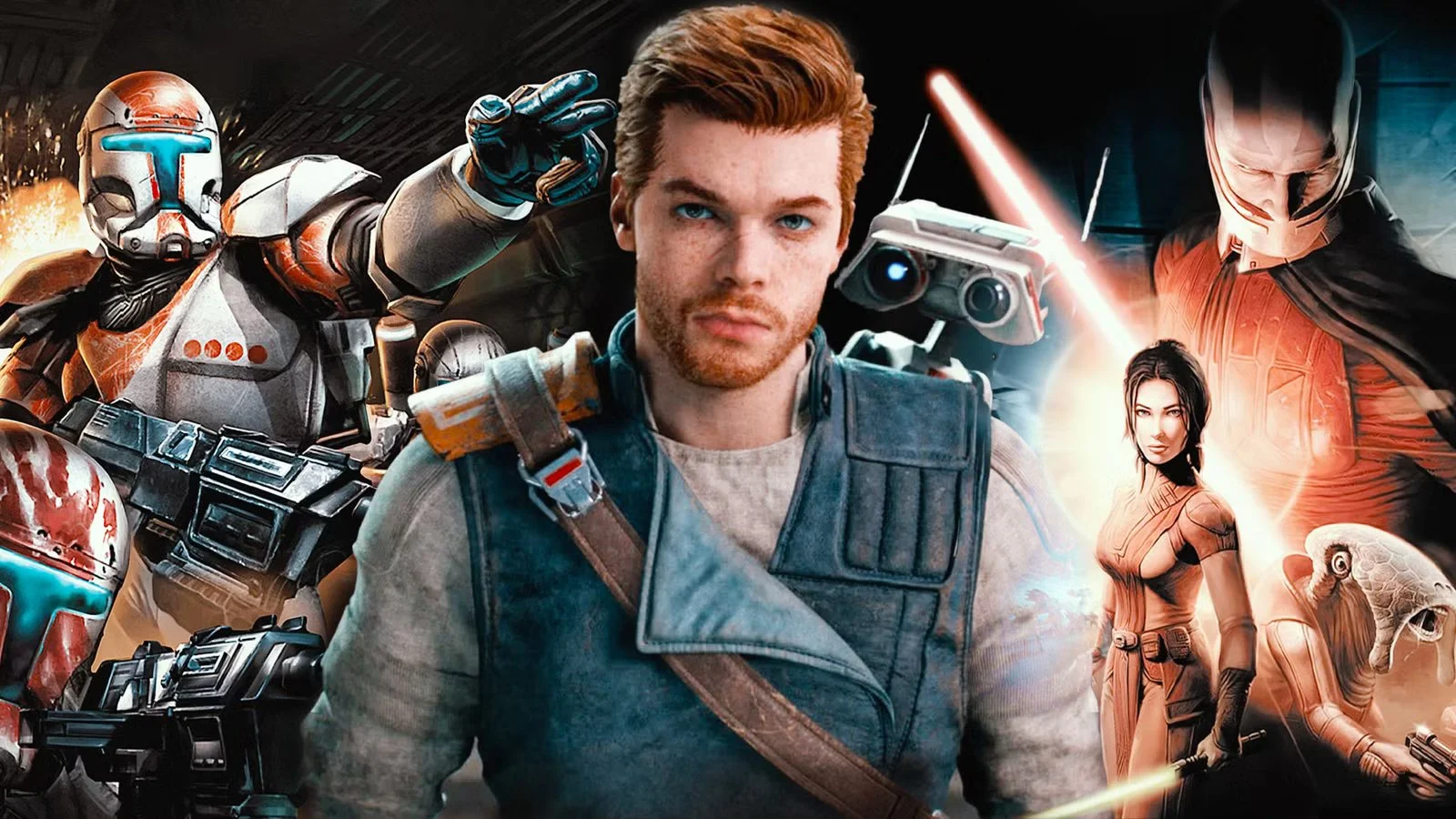
Image courtesy of Wallpapercave.com
For more than four decades, Star Wars games have survived by doing something surprisingly simple: refusing to agree on what a Star Wars game is supposed to be.
Resident Evil is an obvious comparison: it has spent decades wearing different hats without losing the identity that made it recognizable. Star Wars has done the same thing in games for almost as long. Depending on the year, “playing Star Wars” has meant flying a simulator, crawling through an FPS, choosing dialogue in an RPG, commanding armies, racing at stupid speeds or moving soldiers around a tactical map.
That should not work nearly as well as it does. Most licensed series spend years trying to discover a formula they can repeat. Star Wars found something better: the formula could change.
Look through a complete chronological archive of Star Wars games and the pattern becomes obvious. The licence keeps jumping sideways rather than moving neatly forward. What connects the best games is not a genre. It is the confidence to let each game become a good example of its own genre first.
The cockpit came first
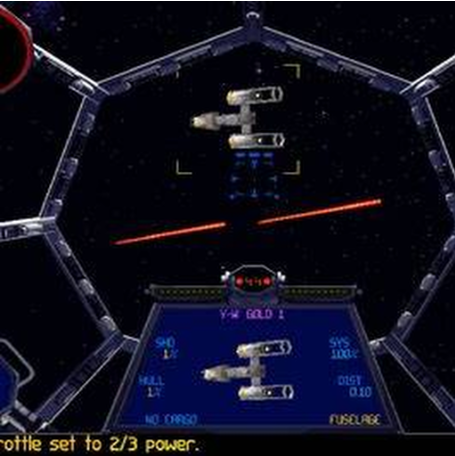
Star Wars: X-Wing turned one cinematic fantasy into a surprisingly demanding space-combat simulation.
For many players, the first convincing answer to “what should a Star Wars game feel like?” arrived in 1993 with X-Wing. LucasArts did not recreate the films scene by scene. It took one fantasy from them, being a Rebel pilot, and treated that fantasy seriously.
Energy management, shields, mission briefings and system damage mattered. The heroic fantasy of firing proton torpedoes suddenly came with the less glamorous responsibility of deciding whether your lasers or engines deserved the electricity.
That became one of the great strengths of the licence. Star Wars is full of occupations: pilot, Jedi, smuggler, soldier, commander, bounty hunter. A game only needs to choose one and build the right verbs around it.
Then LucasArts picked up a blaster
Two years later, Dark Forces did almost the opposite. The cockpit vanished. The galaxy became corridors, elevators, secret rooms and stormtroopers who had the unfortunate habit of standing exactly where Kyle Katarn needed to go.
It obviously shared DNA with Doom, but LucasArts did more than put Star Wars textures on an FPS. Vertical spaces, mission objectives and a stronger sense of place helped the game feel like its own thing. Later Jedi Knight games would add lightsabers and Force powers, making the genre messier in exactly the right way.
Star Wars games are rarely strongest when they behave like museum pieces. They become interesting when a developer asks what the galaxy can do to a genre, not simply how to paint stormtroopers onto it.
KOTOR let Star Wars slow down and think
The continuing question of how to handle a Knights of the Old Republic remake points toward something larger than the fate of one remake. KOTOR is beloved because BioWare did not make a louder version of an existing Star Wars game. It trusted the licence enough to make a proper RPG.
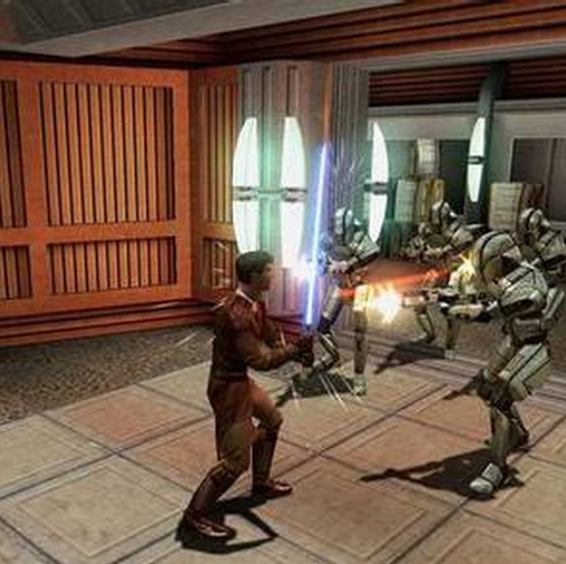
Knights of the Old Republic proved that Star Wars could sit comfortably inside a deep, conversation-heavy RPG.
Star Wars is famous for movement: chases, duels and dogfights. KOTOR often asks you to stop moving and talk. That slower rhythm opened parts of the universe action games could only gesture toward. What does a Jedi believe? What does temptation look like before someone starts throwing lightning? Who gets to decide what the “right” choice is?
The lineage matters. KOTOR belongs to the long history of computer RPGs that runs through games such as Wizardry just as much as it belongs to Star Wars. Dialogue trees, party composition, statistics and moral choices are not distractions from the licence. They are the machinery that makes this version of the licence work.
Republic Commando changed the hero, not just the camera
Republic Commando changed the fantasy again by changing who mattered. You were not the chosen one. You were the squad leader responsible for three professionals who expected you to know what you were doing.
The commands were simple enough to use under pressure: sniper position, grenade point, breach the door, heal up. But they changed the rhythm of every firefight. The fantasy was no longer just “be a clone trooper”. It was “be the person other clone troopers rely on”.
It never needed to define Star Wars gaming forever. It only needed to define one corner of it extremely well.
Strategy, racing, and the glorious refusal to settle down
By the mid-2000s the licence was almost cheerfully impossible to summarize. Empire at War let players think at a galactic scale. Battlefront turned famous locations into multiplayer sandboxes. LEGO Star Wars discovered that the same mythology could survive slapstick, collectibles and tiny plastic trousers.
That reinvention follows the same logic that can make smaller games and stronger sequels more interesting than simple escalation: a clear idea is often more valuable than simply making the previous thing bigger. Star Wars has repeatedly benefited from developers choosing a specific fantasy and committing to it.
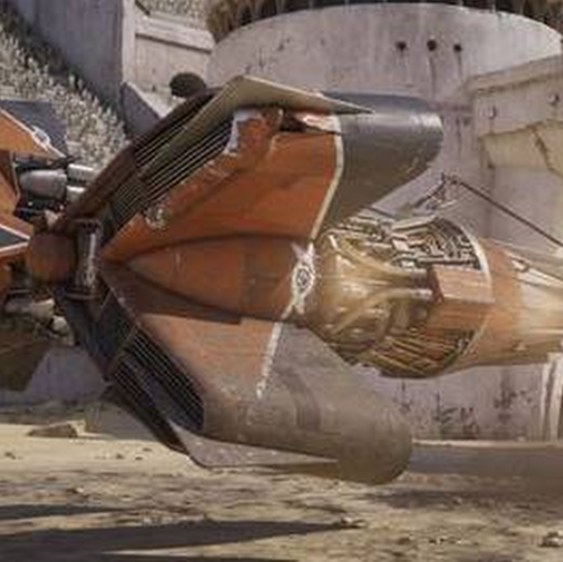
Galactic Racer shows that returning to an old Star Wars genre does not have to mean repeating an old design.
Racing may be the purest example. Episode I: Racer took one sequence from The Phantom Menace and asked what happened if ten minutes of film became an entire game. The answer involved absurd speed, fragile engines, alien pilots and tracks apparently designed by people with a personal grudge against safety barriers.
Galactic Racer revisits that corner of the galaxy in 2026, but the point is not merely that racing is back. It uses modern structures and ideas rather than pretending twenty-seven years have not passed. Returning to a genre does not have to mean embalming it.
Zero Company proves the old trick still works
Star Wars Zero Company is the clearest modern reminder that the licence still benefits from genre confidence. Bit Reactor did not design an action game and slow it down until turns appeared. It built a tactics game around positioning, cover, abilities and squad relationships.
That changes what the Clone Wars feels like. In film and television, clone battles often run on spectacle and momentum. In Zero Company, a doorway matters because of line of sight and a squadmate matters because of what they can do on the next turn. The setting is not decoration. The genre changes how the setting itself is understood.
It is the old LucasArts lesson surviving in a different corporate era: let the genre do real work. Trust that Star Wars is broad enough to survive a grid.
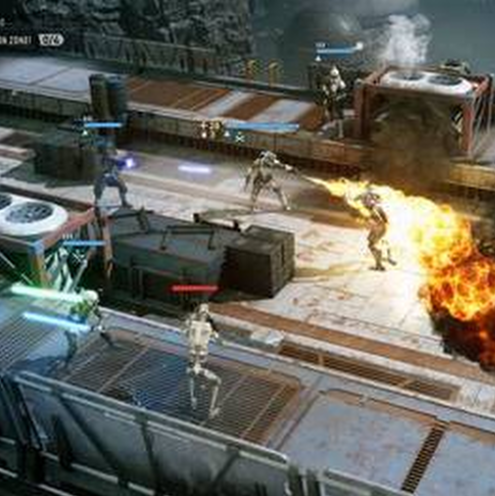
Zero Company turns the Clone Wars into a problem of positioning, planning and squad chemistry.
A licence stays alive by moving
Astro Bot offers a useful parallel: nostalgia works best when a new game understands the spirit of what came before rather than simply copying the surface. Star Wars works the same way. The ships, music and familiar silhouettes matter, but they are not enough by themselves.
Genre-hopping has protected Star Wars from one of the great dangers of a forty-year-old franchise: the idea that authenticity means repetition. If every game had spent decades chasing the exact feel of X-Wing, KOTOR or Battlefront, those classics would probably feel less special now.
So what does it mean to play Star Wars?
Sometimes it means calculating shield power while a Star Destroyer fills the cockpit window. Sometimes it means choosing a dialogue response because you are trying not to become a Sith. Sometimes it means ordering a clone to cover a doorway, building an army or throwing a podracer into a corner at a speed no insurance company would approve.
None of those experiences cancels the others out. That is the point.
The best Star Wars game is allowed to be a game first
The history of Star Wars gaming is messy, uneven and full of experiments that did not always work. Good. A franchise this large should have strange corners, cult favourites and games that make you wonder who approved the pitch. Experiment is healthier than endless imitation.
The licence survives those experiments because its identity is stronger than any single genre. X-Wing did not damage Star Wars by being a simulator. KOTOR did not dilute it by becoming an RPG. Republic Commando did not betray it by pushing Jedi aside. Zero Company does not become less Star Wars because it asks you to think before you shoot.
Every time a developer commits to a genre strongly enough, another part of the galaxy becomes playable.
Star Wars does not need one perfect game formula. After more than forty years, its greatest gaming tradition may be the refusal to have one.

Søren Ahrensborg Kamper